
Quick Answer
This guide compares 20 indoor playground equipment manufacturers in 2026, grouped by region — Asia-Pacific, North America, and Europe — with certifications and a “not a fit if” note for each.
Every manufacturer in this list builds indoor play equipment commercially and can be verified as a real production operation rather than a reseller. The short version: European and North American indoor playground manufacturers hold the ASTM and EN 1176 standards authority and dominate high-end projects, while Asia-Pacific suppliers compete on cost and lead time. The real decision is where to sit between those two.
The market for commercial indoor playground equipment manufacturers is fragmented. There are thousands of suppliers worldwide, but the number of commercial indoor playground equipment manufacturers with their own factory, international certifications, and the capacity to deliver large projects at scale is far smaller.
For buyers, the hard part is not finding an indoor playground equipment supplier. It is telling a factory apart from a trading company, and telling brand markup apart from real production capacity. This roundup of indoor playground equipment manufacturers covers 20 names worth knowing in 2026, so you have a frame of reference before you shortlist.


How Indoor Playground Equipment Manufacturers Split by Region
Before comparing individual suppliers, it helps to understand how indoor playground equipment manufacturers divide up by region. This is not about who is better. It is about three different value propositions:
| Region | Core strength | Typical positioning | Price band |
|---|---|---|---|
| Asia-Pacific | Cost efficiency, lead time, customization flexibility | Export OEM, mid-market turnkey solutions | Low to mid |
| North America | Standards authority, certification systems, insurance and after-sales networks | Premium brands, municipal and school projects | High |
| Europe | Engineering craftsmanship, sustainable design, participation in EN standards | Premium custom work, education and public projects | Mid to high |
European and North American indoor playground equipment manufacturers hold standards-setting influence. When ASTM (the American Society for Testing and Materials) and EN 1176 (the European safety standard for playground equipment) are revised, these companies are the main participants. Their product liability insurance systems and global after-sales networks are also a hard requirement in many large venue tenders.
Asia-Pacific indoor playground equipment manufacturers compete on cost and lead time. The same budget usually buys more square meters or a higher specification from these indoor playground equipment manufacturers. The trade-off is that buyers must do their own factory audits and certification verification.
Understanding this structure matters more than memorizing any list. The sections below run Asia-Pacific, then North America, then Europe — cost and lead time first, standards and premium markets second. If your project needs a bespoke layout rather than an off-the-shelf line, start with custom indoor playground equipment before you compare brand names.
1. Asia-Pacific Indoor Playground Equipment Manufacturers (3)
Asia-Pacific is where indoor playground equipment manufacturers cluster most densely, with China’s Zhejiang and Guangdong provinces forming the largest groups. Suppliers here generally lead on cost efficiency and lead time, but buyers need to run their own supplier audits. This group is ordered Australian-first, China-export-second, so you can see how a mature domestic market operates before comparing the cost structure of an indoor playground equipment manufacturer that exports.
1. Austek Play | Australia | Founding year not consistently published
Headquarters: Marrickville, New South Wales (Sydney), Australia
Austek Play is a well-known Australian indoor play area manufacturer, offering custom soft play systems, climbing structures, trampoline parks, ninja courses, and themed indoor entertainment solutions.
As an indoor playground equipment manufacturer, its design philosophy has a clear commercial bent: entertainment value plus return on investment. The company emphasizes that it does not just sell equipment, but helps clients design circulation that drives repeat visits. Products use high-density foam padding, non-slip surfaces, and heavy-duty steel frames.
- Certifications: Australian safety standards
- Best fit: Australian shopping malls, FECs, childcare centers, hotel entertainment areas
- Not a fit if: Your project is overseas — Austek’s service focus is domestic Australia. Its founding year is also reported inconsistently across sources, so this guide does not cite a specific year; confirm directly with the manufacturer before quoting it.
2. Playtec Australia | Australia | 1993
Headquarters: Cromer, New South Wales (Sydney), Australia
Founded in 1993, Playtec is a long-established Australian commercial indoor playground manufacturer with more than 30 years of experience. It leads with “Australian Made” and serves early learning centers, shopping centers, hotels, cafes, and community centers.
As an indoor playground equipment manufacturer, its product line focuses on soft-contained indoor play and toddler areas, with end-to-end design, manufacturing, installation, and maintenance.
- Certifications: Australian safety standards
- Best fit: Early learning centers, FECs, high-traffic commercial venues
- Not a fit if: You need large multi-level structures — Playtec specializes in soft play and toddler areas, operates at a medium scale (roughly 17 staff), and has limited capacity for very large composite builds.
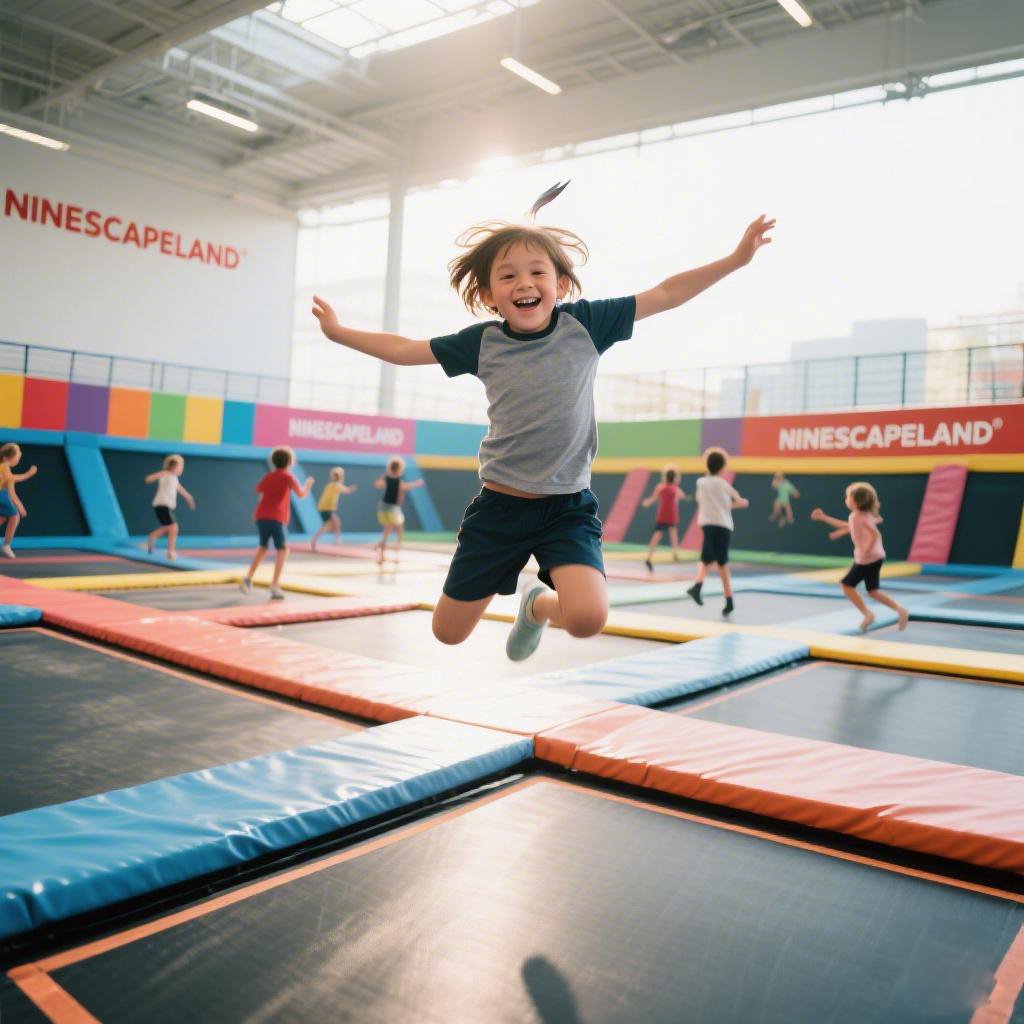
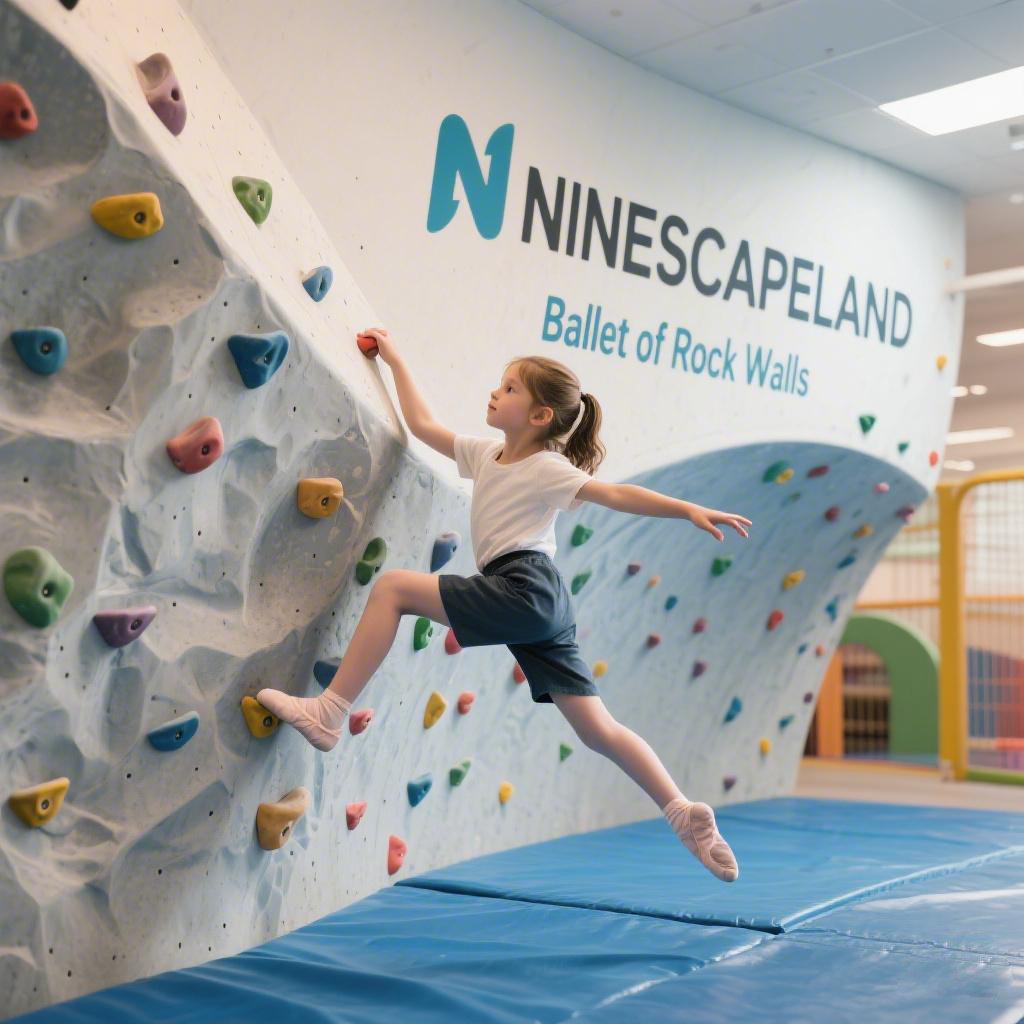
3. NinescapeLand | China | 2008
Headquarters: China | Factory: 50,000 sqm owned production base in Wenzhou | Staff: 200+
NinescapeLand has specialized in exporting indoor playground equipment since 2008, with more than 15 years of B2B experience.
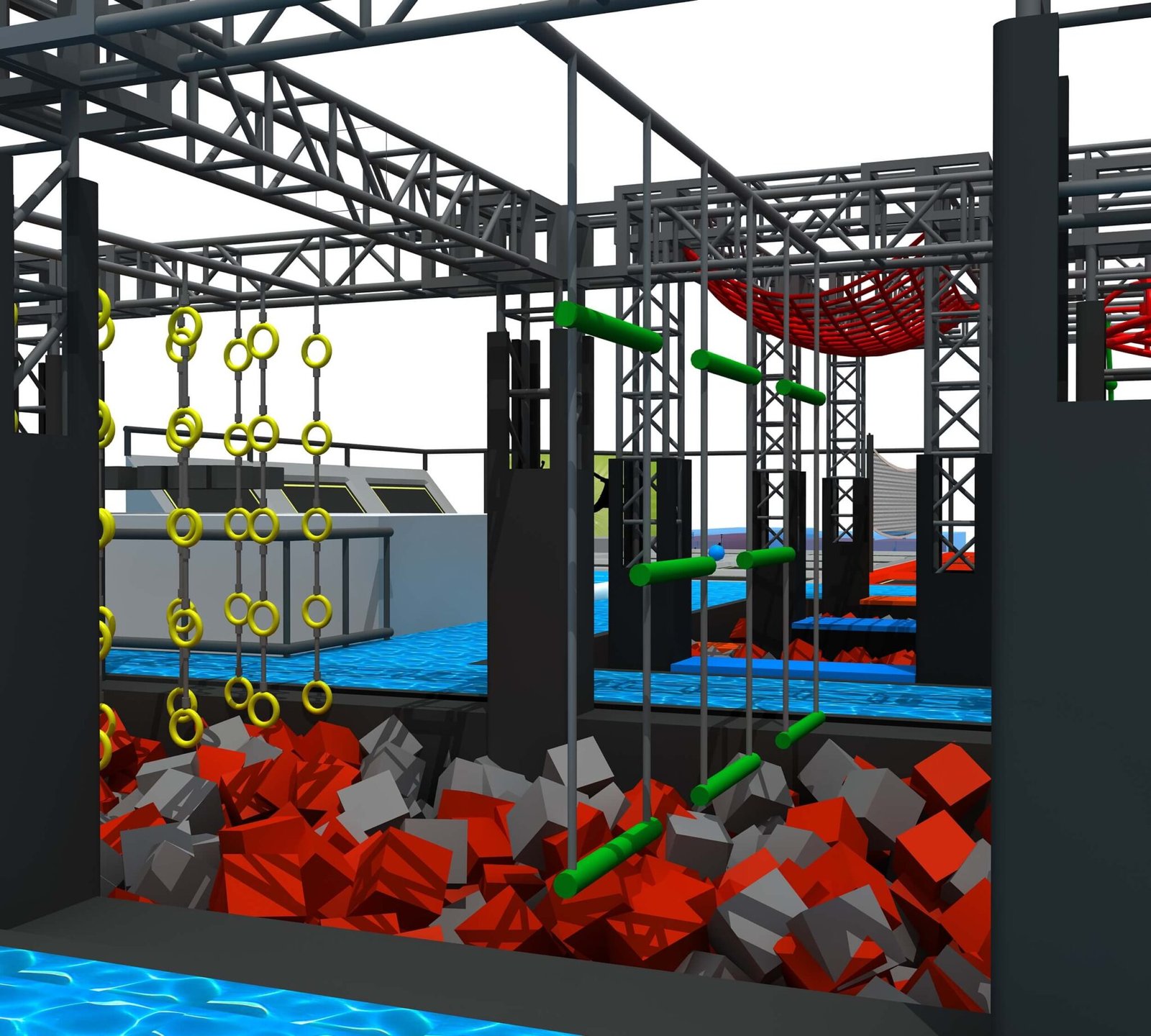
It is a factory-direct, first-tier manufacturer rather than a trading company, offering turnkey indoor playground solutions from concept design and manufacturing through shipping and on-site installation training. The product range covers custom indoor playgrounds, trampoline park equipment, ninja courses, and soft play toddler zones.
The company has completed 1,000+ projects across 75+ countries, including the United States, United Kingdom, Australia, the UAE, and Germany. It offers free 3D design (you approve the render before ordering) and a 3-year warranty on steel structures (1 year on soft-play components).
- Certifications: ASTM F1918, TÜV, EN 1176/1177, ISO 9001:2015, CE
- Best fit: FECs, trampoline parks, ninja courses, mall kids’ zones, turnkey mid-size venues
- Not a fit if: Your project requires a Western on-the-ground after-sales team — the advantage of a China indoor playground equipment manufacturer lies in cost and customization flexibility, so if the project mandates long-term on-site support from a local team, a European or North American brand is the better call. Buyers should also audit the factory in person and check original certification documents.
2. North America Indoor Playground Equipment Manufacturers (8)
North America has the most standardized market for indoor playground equipment manufacturers in the world. Most indoor playground equipment manufacturers here have mature certification systems (ASTM F1918 for soft-contained play structures, ASTM F1487 for public playground equipment) and are the first choice for large chain brands. This group is ranked by brand scale and international reach.
4. KOMPAN | Denmark | 1970
Headquarters: Odense, Denmark | Factory: Brno, Czech Republic
Strictly speaking KOMPAN is a European company, but its North American market share and service network mean it is routinely discussed within the North American supply chain.
KOMPAN is one of the best playground equipment manufacturers in the world by scale and international reach, founded in 1970 by sculptor Tom Lindhardt and Hans Mogens Fenne-Frederiksen. The brand began almost by accident: a sculpture Lindhardt designed for a housing development was used by children as a climbing frame, which led him to design “sculptures for children” instead.
Today this indoor playground equipment manufacturer operates in 90 countries, runs its own research department studying the relationship between play and child development, and covers outdoor play, outdoor fitness for all ages, and park furniture. According to a 2026 announcement by the Chuzhou municipal government, KOMPAN has signed to build its first group factory in Asia at that location.
- Certifications: EN 1176, TÜV, ASTM
- Best fit: Municipal parks, international schools, premium commercial developments
- Not a fit if: You are a budget-sensitive private FEC — KOMPAN positions at the high end, and its brand premium can take up a significant share of total project budget. Investors whose core business is pure indoor soft play are usually not its target customer. If you want to see how the other end of the cost structure is built, compare a factory-direct quote before ruling it out.
5. Miracle Recreation | United States | 1927
Headquarters: Monett, Missouri, United States | Ownership: Part of PlayPower, Inc.
Miracle Recreation was founded in 1927. Its first product was a rotating play device called the “Miracle Whirl,” designed by John Ahrens and his son Claude Ahrens, with Claude later driving the company’s expansion. Nearly a century on, it is a representative American brand for heavy-duty outdoor play.
It is a member of the PlayPower group, which also owns Soft Play, HAGS, PLAYWORLD, and EZ Dock, making it the largest non-powered play equipment group in the world.
- Certifications: IPEMA, ASTM
- Best fit: Large municipal parks, schools, military bases, high-use-intensity locations
- Not a fit if: You need indoor soft play — Miracle’s core market is heavy outdoor steel structures, and indoor soft-contained play is not its product focus.
6. Little Tikes Commercial | United States | 1969
Headquarters: Hudson, Ohio, United States | Ownership: The toy brand belongs to MGA Entertainment; the commercial play line is operated by PlayPower
Little Tikes is a toy brand familiar to parents well beyond the US, and today a commercial indoor playground equipment manufacturer, founded in 1969 in Ohio by Tom Murdough and acquired by MGA Entertainment in 2006. The commercial line of the same name, Little Tikes Commercial, is operated by the PlayPower group and focuses on childcare and early education settings — it is a separate company from the toy business.
As an indoor playground equipment manufacturer, its products are characterized by clear age segmentation — from crawling infants through preschoolers, each stage has corresponding soft play modules, low climbing structures, and activity centers. Brand recognition is high and parent acceptance is strong.
- Certifications: ASTM, CPSC (US Consumer Product Safety Commission)
- Best fit: Childcare centers, kindergartens, mall kids’ zones, toddler areas within family entertainment centers
- Not a fit if: You need older age groups or large multi-level structures — Little Tikes Commercial’s strength is early childhood, and large high-level adventure structures are not its positioning. For layout thinking that squeezes more visits out of the same floor, see these indoor play area design strategies.
7. Playworld Systems | United States | 1971
Headquarters: Lewisburg, Pennsylvania, United States
Founded in 1971, Playworld is an indoor playground equipment manufacturer and an industry advocate for inclusive design. In 2012 it published the industry’s first inclusive design guidebook, helping to spread accessible playgrounds across the United States. Playworld is also an active participant in ASTM standards development.
As an indoor playground equipment manufacturer focused on inclusion, if your project involves children with special needs, or needs to meet accessibility requirements for a government project, Playworld is worth examining first.
- Certifications: ASTM, ADA (Americans with Disabilities Act), EN
- Best fit: Community centers, schools, public play spaces
- Not a fit if: You operate a purely commercial indoor soft play venue — Playworld’s core competitiveness is outdoor and inclusive design, and indoor soft play is not its main line.
8. Landscape Structures | United States | 1971
Headquarters: Delano, Minnesota, United States | Structure: Employee-owned
Landscape Structures was founded in 1971 by Barb and Steve King. Its origin is unusual: in his 1967 graduation project at Iowa State University, Steve King proposed the concept of “Continuous Play” — children could move from one component to another without touching the ground. That idea later became a common industry practice.
This indoor playground equipment manufacturer is employee-owned and has more than 300 employees. It invests heavily in inclusive design, employs dedicated inclusive play specialists, and even runs a Jr. Play Team that involves children with disabilities in product testing. In 2025 it was named to Forbes’ inaugural list of America’s Best Employers for Disability Inclusion.
- Certifications: ASTM, ADA
- Best fit: Municipal parks, schools, community playgrounds
- Not a fit if: You need indoor commercial play — like Playworld, Landscape Structures focuses on outdoor heavy structures and inclusive design.
9. Soft Play, LLC | United States | 1984
Headquarters: Huntersville, North Carolina, United States | Factory: Monett, Missouri | Ownership: Part of PlayPower
Soft Play is the pioneer of American indoor play manufacturers working in soft-contained play. Founded in 1984 by Grant Strawcutter and Neal Crites in Charlotte, its first customers were fast-food chains like McDonald’s and Chuck E. Cheese, which needed a safe play space for children inside their restaurants.
Soft Play’s core contribution was inventing the “play-in” device — soft-contained play that wraps slides, tunnels, and climbing into a padded structure, dramatically reducing fall injuries. This approach later became an industry standard. To date Soft Play has completed 40,000+ installations.
This indoor playground equipment manufacturer was acquired by PlayPower in 1996 and merged with the group’s PLAYTIME brand in 2021.
- Certifications: ASTM F1918 (soft-contained play structures), CPSIA
- Best fit: Quick-service restaurants, malls, museums, airports, hospital children’s areas
- Not a fit if: You need large hard-structure builds — Soft Play focuses on soft play structures, and large steel slides or trampolines are not in its product line. It is also a group brand, so quoting runs through the PlayPower system.
10. Go Play Systems | United States | Founding year not published
Headquarters: United States
Go Play Systems operates on a model clearly different from the indoor playground equipment manufacturers above — it is a stocking manufacturer.
Traditional custom manufacturers re-source materials and re-schedule production, with lead times often running 3–4 months. This indoor playground equipment manufacturer instead maintains stock of 2,000+ ready-made designs that customers can select directly or modify quickly. The company states it delivers concept drawings within 24 hours, and standard models ship far faster than the industry average.
This indoor playground equipment manufacturer also provides full-lifecycle services: maintenance, parts replacement, repair, and refurbishment.
- Certifications: Commercial-grade standards, ADA-related design
- Best fit: North American churches, schools, fitness centers, community centers — any venue that needs to open quickly
- Not a fit if: You need a highly customized theme park — GoPlay’s strength is speed and stock, and if you need a one-of-a-kind themed design it is less flexible than a custom manufacturer. Its founding year is not disclosed on its website, so cite it as “per the company website” or leave it blank.
11. iPlayCo | Canada | 1999
Headquarters: Langley, British Columbia, Canada | Other factories: Milan, Italy; Subic Bay, Philippines
iPlayCo is a Canadian publicly listed indoor playground manufacturer, founded in 1999 in Langley, BC. Its distinguishing strength is themed customization, particularly IP licensing — recent flagship work includes an interactive Angry Birds play area and a Paw Patrol-themed project at American Dream mall.
This indoor playground equipment manufacturer has completed installations in 90+ countries. Its largest single project, a 24,938 sq ft play center at the Mall of Dhahran in Saudi Arabia, was recognized by Guinness World Records as the world’s largest children’s soft play area.
- Certifications: ASTM, CAN/CSA-Z614 (Canadian playground standard)
- Best fit: Large FECs, branded theme parks, IP-licensed projects
- Not a fit if: You have a small or mid-size budget — iPlayCo’s custom and themed design capability is strong, but pricing is correspondingly high, and lead times are affected by cross-country production allocation.
3. European Indoor Playground Equipment Manufacturers (9)
European indoor playground equipment manufacturers are known for solid engineering craftsmanship, a focus on sustainability, and deep involvement in standards development — a profile that shapes how these indoor playground equipment manufacturers win public and education tenders. EN 1176 is the European safety standard for playground equipment and one of the most widely referenced standards globally. This group is ordered full-service providers first, specialist manufacturers second.
12. SPI Global Play | United Kingdom / Sweden | 1972
Headquarters: Wrexham, UK; group headquarters in Malmö, Sweden | Ownership: Global Leisure Group
SPI Global Play is a representative European FEC turnkey supplier and one of the region’s larger indoor playground equipment manufacturers. It started in the UK in 1972 and is now part of Sweden’s Global Leisure Group, with 11 European partners.
This indoor playground equipment manufacturer supplies not just equipment but complete entertainment center solutions: indoor soft play, trampoline parks, mini golf, laser mazes, VR experiences, and themed decoration. Production is distributed across Italy, Belgium, and Slovakia, with an installation team of 100+. It has completed 2,500+ projects.
- Certifications: EN 1176, ASTM
- Best fit: European multi-activity entertainment centers, integrated FECs
- Not a fit if: Your project is in Asia or the Americas — shipping from European production sites means significantly higher cross-continental logistics cost and time. Its strength is also full-service integration, so if you only need straightforward equipment procurement it may not be the optimal choice.
13. ELI Play | Netherlands | 1994
Headquarters: Boxtel, Netherlands | Sales offices: France, Germany, Denmark
ELI Play, short for European Leisure Industries, was founded in 1994 and started modestly — its first business was cleaning ball pits, and it gradually transformed into an equipment manufacturer.
It is now one of the main commercial indoor playground equipment manufacturers in the Netherlands, with a new 10,000 sqm factory and roughly 70 employees, specializing in trampoline parks and indoor playgrounds. Over the past 30 years it has completed 2,500+ playgrounds and 300+ trampoline park projects.
- Certifications: EN standards
- Best fit: European FECs, trampoline parks
- Not a fit if: Your project is outside Europe — ELI Play’s core market is clearly Europe, and its service network in Asia and the Americas is relatively thin. Note that its French office does not make it a French company; both headquarters and factory are in the Netherlands.
14. HAGS | Sweden | 1948
Headquarters: Aneby, Sweden (administrative HQ in Egham, UK) | Factory: Poland | Ownership: Part of PlayPower
HAGS was founded in 1948 and is a long-established Swedish playground equipment manufacturer serving both outdoor and indoor play area projects. Its trajectory resembles many Nordic companies: it started with industrial products, then responded to Sweden’s large-scale housing construction in the 1950s and 60s by producing slides and swings, gradually becoming a major European supplier of playground equipment.
As an indoor playground equipment manufacturer, HAGS is known for the durability of its galvanized steel structures, suited to high-intensity public use. Its factory is in Poland, with operating companies in Sweden, the UK, Germany, France, Spain, and Denmark. It is part of the PlayPower group.
- Certifications: EN, ISO 9001, ASTM
- Best fit: Municipal projects, parks, high-traffic community recreation centers
- Not a fit if: Your project is mainly indoor soft play — HAGS focuses on durable outdoor equipment. It also shares PlayPower ownership with Miracle and Soft Play, so check whether you are dealing with the same supply chain.
15. Eibe Play | Germany | 1975 (brand)
Headquarters: Röttingen, Bavaria, Germany | Structure: Family business
The Eibe brand name was formally adopted in 1975, but its family carpentry business traces back to 1438 — the company has been run by the same family for nearly six centuries.
Eibe is known among European indoor playground manufacturers for combined wood and metal design and for product research aimed at children’s motor skills development. It works closely with schools, kindergartens, and early education institutions. It employs roughly 350 people worldwide and in 2025 received Bavaria’s “BAYERNS BEST 50” award for innovation and growth.
- Certifications: DIN EN 1176, TÜV, ISO
- Best fit: Kindergartens, schools, children’s education institutions, themed camps
- Not a fit if: You run a purely commercial FEC — Eibe’s design thinking leans toward education and natural settings, and the high-stimulation demands of a commercial entertainment center are not its main direction.
16. Proludic | France | 1986
Headquarters: Vouvray, Indre-et-Loire, France
Proludic is a leader among French playground equipment manufacturers, founded in 1986. Per its own website, it has completed 100,000+ playgrounds and sports areas across 55 countries. It manufactures in France, which is why local governments often treat it as a preferred short-supply-chain supplier.
This indoor playground equipment manufacturer covers play for ages 1–12, inclusive structures, outdoor fitness (Spark Park), and urban sports courts.
- Certifications: EN, CE
- Best fit: Municipal projects, landscape architecture projects, holiday camps
- Not a fit if: You need custom indoor commercial play — Proludic’s focus is outdoor municipal and landscape work, so pure indoor customization needs to be confirmed in advance.
17. Lappset Group | Finland | 1970
Headquarters: Rovaniemi, Finland
Founded in 1970, Lappset is a design-driven Finnish indoor playground equipment manufacturer. Its products emphasize natural materials (mainly wood) and a Nordic design language, alongside a digital interactive line (SmartUs) that combines sensors, lighting, and sound into play equipment.
Group turnover in 2024 was EUR 61.8 million. It has strong design capability in themed adventure play.
- Certifications: EN, CE, ISO
- Best fit: Theme parks, educational spaces, nature-themed play areas
- Not a fit if: You want low cost and fast delivery — Lappset positions at the mid-to-high end and operates at medium scale, so capacity for very large projects should be assessed in advance.
18. Playdale Playgrounds | United Kingdom | 1978
Headquarters: Haverthwaite, Cumbria, UK | Ownership: Now owned by BCI Burke
This indoor playground equipment manufacturer was founded in 1978 by father and son Jack and John Croasdale. What is unusual is the family background — the Croasdale family has been in forestry and timber since 1735, and it entered playground equipment because the local community needed a new playground.
In 2010 Playdale completed Wallace Park in Lisburn, Northern Ireland, then the largest play area in Europe. In 2007 it launched i.play, the world’s first electronic smart play equipment. Over 45 years it has completed 25,000+ playgrounds. It is now owned by US-based BCI Burke.
- Certifications: BS EN 1176 (Kitemark certified)
- Best fit: Schools, communities, municipal projects, the UK domestic market
- Not a fit if: You need overseas delivery — Playdale’s market focus is the UK, and although it has pursued exports since 2010, its overseas service network remains limited.
19. Soft Play Supplies | United Kingdom | 1994
Headquarters: United Kingdom (Bristol and other locations)
Soft Play Supplies is a UK specialist indoor play equipment supplier, founded in 1994 with more than 30 years of industry experience. Its product line is tightly focused: multi-level soft play frames, toddler and baby areas, sensory rooms for special educational needs, modular soft play pieces, themed environments, slides, and climbing.
Its installation team covers England, Wales, Scotland, and Northern Ireland, providing end-to-end project management and financing/leasing options.
- Certifications: UK and EU safety standards, CE
- Best fit: UK venues, childcare institutions, mall kids’ zones
- Not a fit if: Your project is outside the UK — Soft Play Supplies is a classic domestic service manufacturer of medium scale, with limited overseas delivery capacity.
20. Husson International | France | 1920 (entered play equipment in 1988)
Headquarters: Lapoutroie, Alsace, France
Husson International is a French family business and indoor playground equipment manufacturer founded in 1920 by blacksmith Emile Husson in Orbey, Alsace. It launched the Costocolor steel-and-timber play line in 1988, formally entering the play and sports equipment field. Per its website, headquarters and factory are in Lapoutroie, Alsace.
Its distinguishing feature is that production is concentrated in France (per the company website and third-party sources, the share of French-made production is high), and it has specific expertise in working with robinia timber — a wood that needs no chemical treatment to last outdoors, making it common in premium municipal and landscape projects. Its website also states equipment durability of 30 years or more.
Its range covers children’s play equipment, outdoor fitness areas, urban sports courts, grandstand systems, and landscape modules. Customers are mainly local governments, campsites, and property developers. The company emphasizes environmental commitment and industrial traceability and holds ISO 9001 and ISO 14001.
- Certifications: EN 1176, EN 1177, ISO 9001, ISO 14001
- Best fit: Municipal parks, campsites, landscape projects
- Not a fit if: You need indoor commercial play — Husson’s product focus is outdoor play and landscape, and indoor soft play or multi-level structures are not its main line; its market is also mainly France and neighboring European countries, with limited intercontinental delivery capability.
How to Choose: A Decision Table
After reading all 20, the choice may feel harder rather than easier. The table below works backward from procurement scenario to narrow your shortlist fast. Use it to compare indoor playground equipment manufacturers side by side rather than page by page, and to weigh indoor playground equipment manufacturers from different regions on the same criteria.
| Your project type | Budget | Prioritize | Avoid |
|---|---|---|---|
| Large municipal / school project | High | KOMPAN, Landscape Structures, Playworld | Pure OEMs (no certification or after-sales network) |
| Chain FEC / theme park | High | iPlayCo, SPI Global Play, KOMPAN | Stocking manufacturers (weak customization) |
| Mall / QSR kids’ zone | Mid | Soft Play, Little Tikes Commercial, Soft Play Supplies | Heavy outdoor manufacturers |
| Small to mid-size indoor playground | Mid | NinescapeLand, ELI Play, Playtec | Premium brands (budget overrun) |
| Fast opening (tight schedule) | Mid | Go Play Systems, NinescapeLand | Custom manufacturers (3–4 month lead times) |
| Special needs / inclusive play | High | Playworld, Landscape Structures | Purely commercial play manufacturers |
Pitfalls When Vetting Indoor Playground Equipment Manufacturers
1. Verify certifications as originals, not marketing pages. Ask indoor playground equipment manufacturers for report numbers you can check independently.
ASTM F1918 (soft-contained play structures), ASTM F1487 (public playground equipment), EN 1176 (European standard), EN 1177 (impact-attenuating surfacing) — each has its own scope. Ask the supplier for the original third-party test report, not a certification logo on their website.
2. Separate the factory from the trading company. The industry has many trading companies packaged as manufacturers. The most direct test is asking for a live video factory tour — production floor, machinery, warehouse. A real factory can go live on camera at short notice; a trading company usually stalls.
3. Ask exactly which products a certification covers. Many indoor playground equipment manufacturers hold certifications for a specific model rather than the whole product line. Before signing, confirm the exact model you are buying falls within the certified scope.
4. Put the delivery date in the contract. Indoor playground projects have fixed opening dates, and delays translate directly into lost rent and revenue. Build milestone dates and penalty clauses into the contract.
5. After-sales terms matter more than price. Wear on soft play components, maintenance of steel structures, supply of spare parts — these long-term costs often exceed 15% of the purchase price. Confirm the warranty period, the number of years spare parts will be supplied, and whether there is a local service team. As a benchmark, one manufacturer publishes a 3-year warranty with defined spare-parts supply.
Final Thoughts
This list covers 20 indoor playground equipment manufacturers, but the industry picture is far bigger. No single indoor playground equipment manufacturer is optimal on cost, lead time, certification, and after-sales all at once.
So start by clarifying your core constraint: is it a tight budget, a schedule that cannot slip, or certification as a hard gateway? Get that one point clear and your shortlist of indoor playground equipment manufacturers halves immediately — and that is exactly where NinescapeLand is strongest:
- Own factory, no middleman: a 50,000 sqm production base in Wenzhou with 200+ staff, so cost and lead time are ours to control;
- One-stop delivery: from 3D design and production to ocean freight and on-site installation, without you coordinating multiple vendors;
- Full certification: TÜV, ASTM, EN 1176, CE, and ISO 9001, configured to your target market;
- 3-year warranty on steel structures and 1-year warranty on soft-play components, with after-sales you can hold us to.
Founded in 2008, with 75+ countries and 1,000+ projects delivered. Every list of indoor playground equipment manufacturers carries its author’s perspective, so compare at least three suppliers — but we can send you a design and a quote first.
Have site parameters on hand? Send them over and get a free 3D design and itemized quote within 24 hours.
Frequently Asked Questions
Q1: How do I tell an indoor playground equipment manufacturer from a trading company?
The simplest method is to request a live video factory tour and ask them to show production equipment (injection molding machines, welding lines, cutting equipment), not just a showroom. Genuine indoor playground equipment manufacturers also usually have their own patents and real factory photos; trading companies’ credentials pages tend to show only a business license and a few product shots.
Q2: What is the difference between ASTM and EN standards? Which should I follow?
For indoor playground equipment manufacturers, ASTM is the American standard, EN 1176 is the European standard. Which one applies depends on your target market: selling into the US requires ASTM (F1918 for soft-contained play, F1487 for public playground equipment); selling into Europe requires EN 1176. If your project serves a global market, prioritize an indoor playground equipment supplier holding both.
Q3: Why are European and North American manufacturers so much more expensive?
The price gap comes from three things: labor cost, compliance cost (insurance, certification maintenance, product liability), and brand premium. The product liability insurance system is a major cost item for Western manufacturers, but it also means more complete compensation if an accident occurs. The cost advantage of Asia-Pacific indoor playground manufacturers is real, but buyers take on more factory-audit and risk-verification work themselves.
It is also worth stating that this cost advantage does not equal a quality compromise. A substantial share of mainstream Asia-Pacific manufacturers already hold third-party certifications such as TÜV, SGS, and ASTM, and can compete with international brands on process and quality control. The key remains choosing the right supplier.
Q4: How long do lead times usually run?
Most indoor playground equipment manufacturers working on custom builds need 3–4 months (design sign-off, scheduling, production, ocean freight, installation). Stocking manufacturers such as GoPlay can compress this to a few weeks. Build in a 1–2 month buffer, especially in peak season.
Q5: Are Chinese manufacturers’ certifications trustworthy?
For mainstream China indoor playground equipment manufacturers holding third-party TÜV, SGS, or ASTM reports, the certifications themselves are credible — TÜV and SGS are independent third-party testing bodies, not self-issued certificates. But check three things: the exact model scope of the certification; the original report (whose number can be verified with the issuing body); and the difference between a factory system certification (ISO 9001) and a product certification (ASTM F1918) — the former certifies management processes, the latter the product itself.
Q6: Is it better to buy individual pieces or a full turnkey solution?
Should you buy piece by piece from different indoor playground equipment manufacturers, or from one? If your floor area is under 200 sqm, buying individual pieces and assembling yourself is usually more flexible. Above 500 sqm, a turnkey solution (design, manufacturing, and installation in one contract) is easier to control for quality and schedule, because responsibility sits with a single party and problems cannot be passed between vendors. You can see how a complete turnkey indoor park build is staged from design to opening.
Note: This comparison of indoor playground equipment manufacturers is compiled from manufacturer websites, the IAAPA (International Association of Amusement Parks and Attractions) member directory, and public company registration data. Founding years and certification scopes may be updated over time; verify directly with the manufacturer before signing. Some certification descriptions are as stated by manufacturer websites and are noted as such.
Sources differ on a few founding years (for example, some channels list Eibe as 1973 and KOMPAN as the 1970s); this article follows the year published on each company’s website.