
Quick Answer
Russia has several local indoor playground equipment manufacturers, including companies based in Novosibirsk, Perm, St. Petersburg, and Ryazan. Their products cover trampoline parks, indoor mazes, rope courses, climbing walls, and soft play equipment. This guide compares 14 Russian manufacturers and one international factory-direct supplier to help FEC investors evaluate their options.
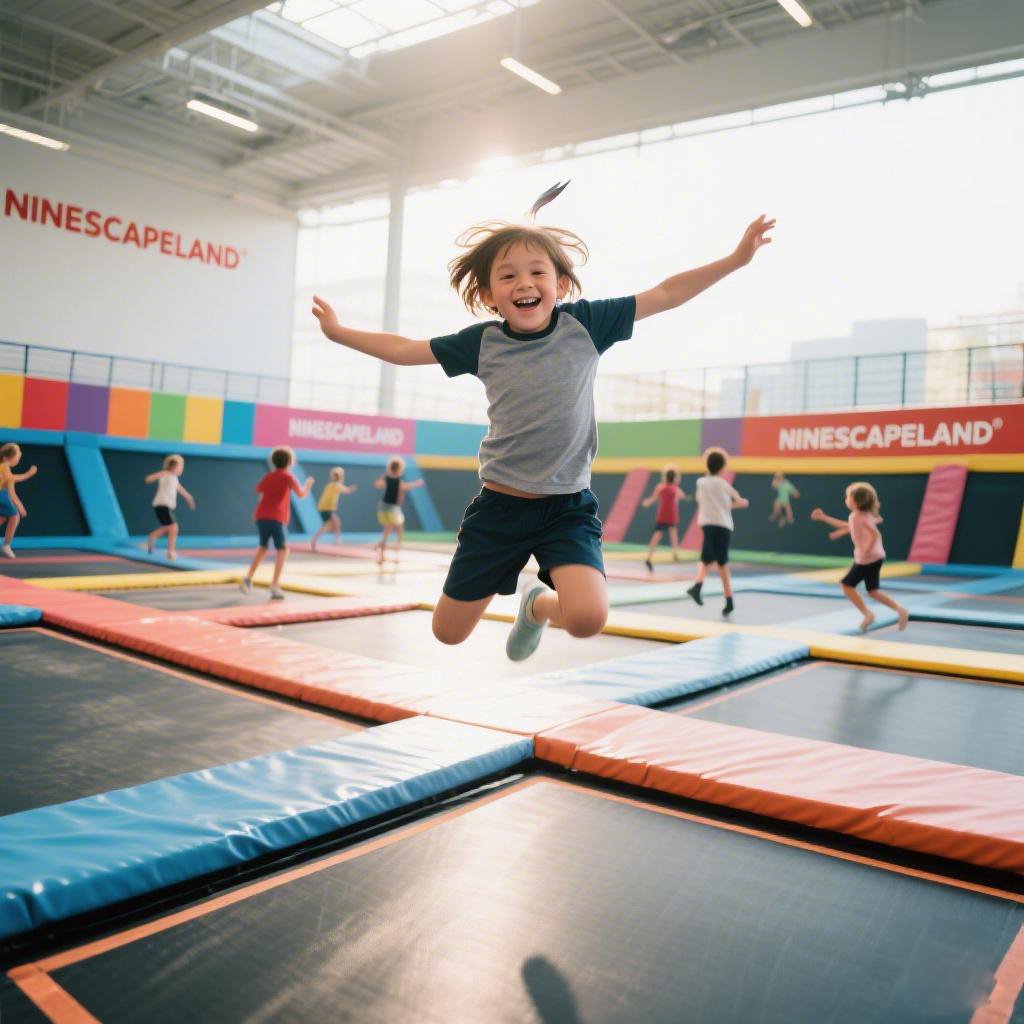
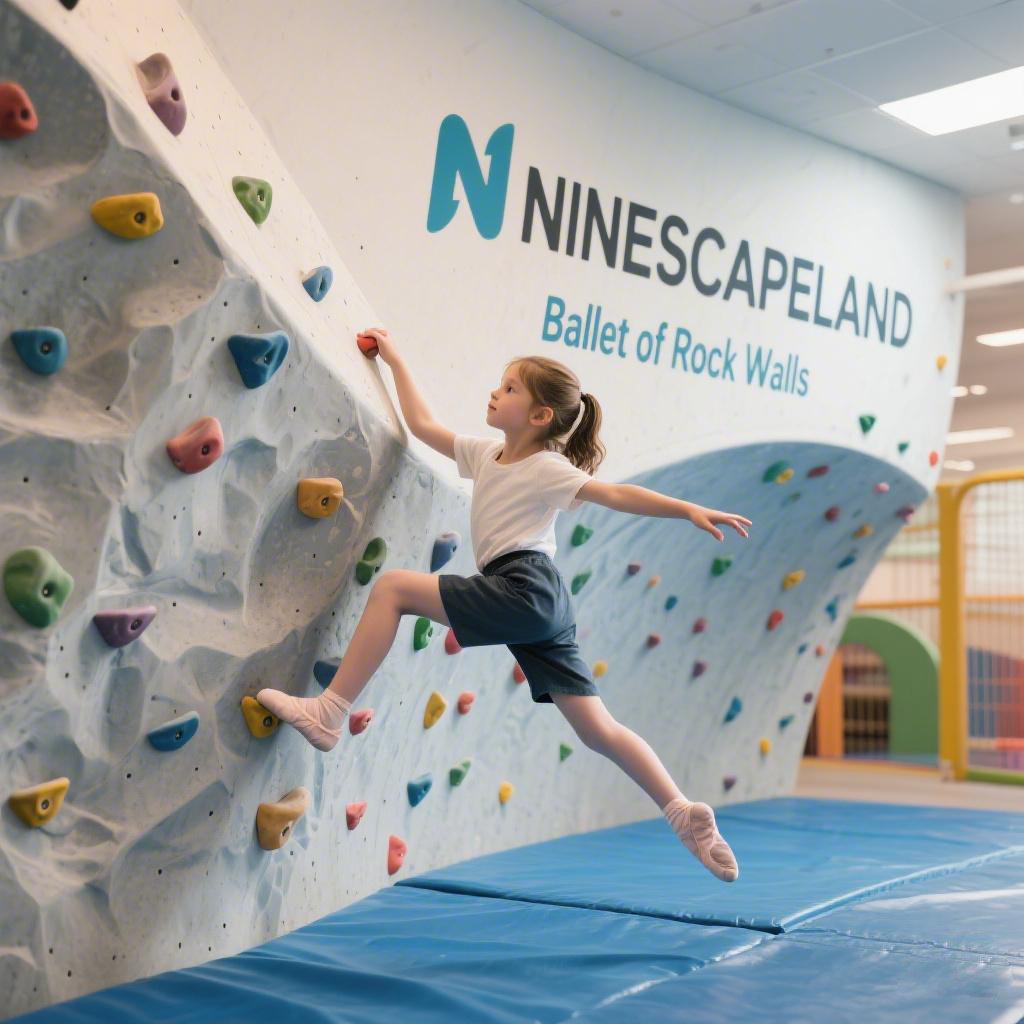
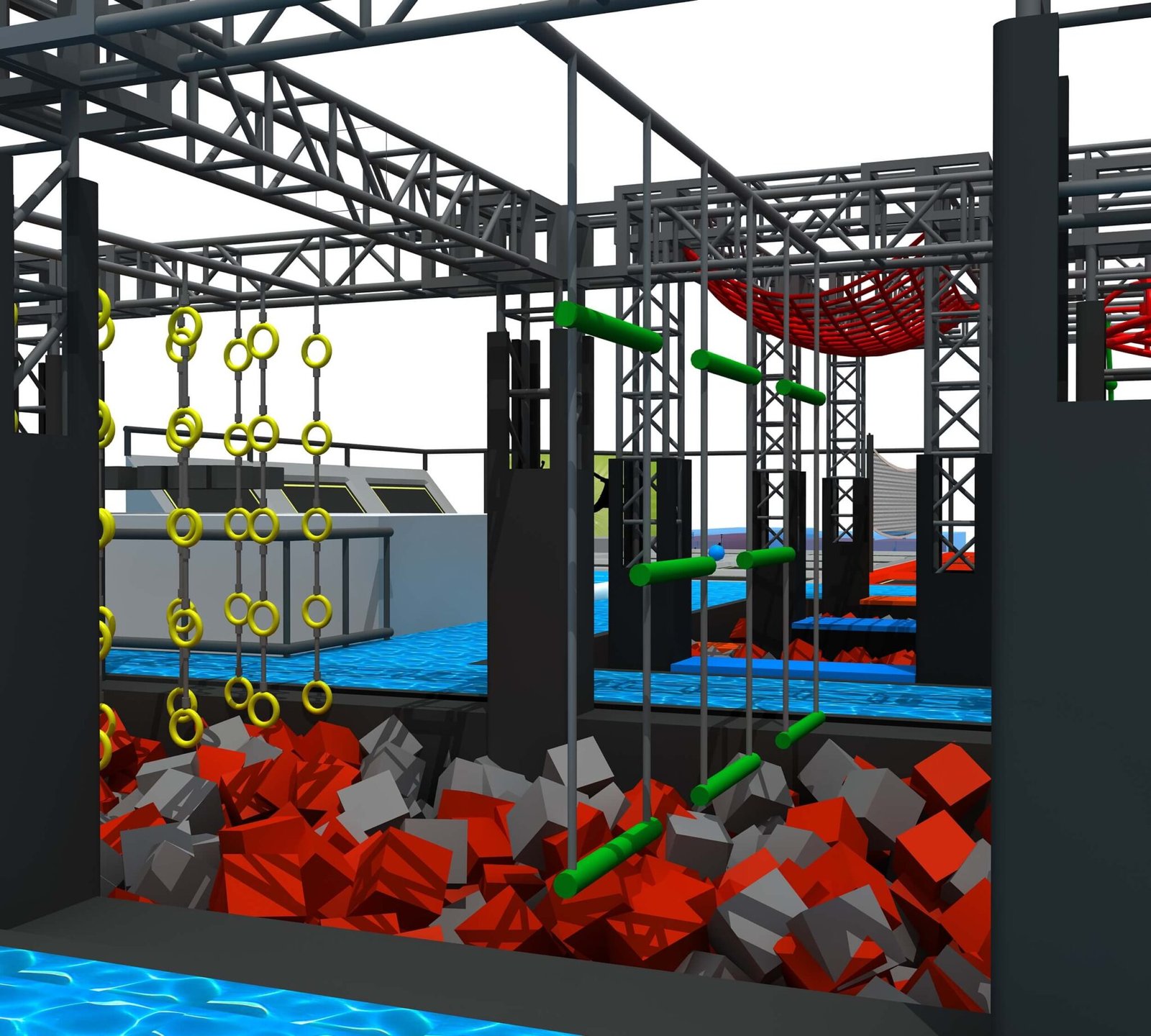
For projects requiring multiple attraction types, NINESCAPELAND offers a factory-direct alternative. Founded in 2008, it operates a 50,000㎡ manufacturing facility and has delivered projects in 75+ countries, providing custom FEC solutions with free 3D design.
Russia’s Indoor Play Market in 2026
Three facts define this market.
First, demand keeps growing. Russia’s winters make indoor family entertainment a year-round business, and mall-based FEC chains keep expanding — Zamania, for example, operates around 20 centres of 2,000–3,000㎡ in Russian shopping centres and has already expanded to Dubai.
Second, local supply is contracting. At RAAPA EXPO (Russia’s main amusement industry show in Moscow), the number of Russian exhibitors fell from 92 in 2025 to about 71 in 2026, while Chinese exhibitors grew from 63 to 84 — roughly half the show floor. The organisers of the 2024 autumn edition reported that Chinese equipment was “almost sold out” during the show.
Third, Central Asia has no local indoor manufacturing at all: the RAAPA 2026 exhibitor list includes zero companies from Kazakhstan and Uzbekistan. Every indoor playground project in the region is, by definition, an import project.
Who Builds, Who Integrates, Who Imports
When you research Russian suppliers, you will meet three different roles — and it pays to know which one you are talking to.
Builders own production facilities and manufacture equipment themselves. This guide’s Top 15 focuses on this group.
Integrators design and deliver projects but do not manufacture: they combine design services, project management and equipment sourced from factories. Several Russian integrators state on their websites that they source equipment directly from China — one even lists a Chinese production line on its contact page. For a buyer, integrators are convenient but add a margin on top of the factory price.
Importers resell foreign-made equipment, usually with warehousing and installation services. This model works for small projects and urgent orders, but custom FEC-grade attractions are rarely available this way.
Understanding this structure explains a pattern you will see throughout this list: even Russia’s own leading integrators openly buy from China. That is the market reality this article returns to at #15.
The Top 15 Indoor Playground Equipment Manufacturers
Find the Right Manufacturer for Your Project
Before the detailed profiles, here is the list mapped to common buyer needs:
| Your project needs | Best fits on this list |
|---|---|
| Full FEC build — trampoline park, ninja course, multi-level maze and climbing walls in one contract | NinescapeLand (#15, factory-direct) |
| Commercial trampoline park | Unitramp, Funarena, SportBatut, Trampoline Komplekt |
| Multi-level indoor play maze / soft play structures | LabClub, Otadoya, Dobromir NSK, Igrotsvet |
| Indoor rope park/ninja course | Outride Park, ParkWood’s, Unitramp |
| Climbing walls | Unitramp, ParkWood’s, Outride Park |
| Toddler zones, sensory rooms, kindergarten soft play | Nellya Plus, Dobromir NSK |
| Inflatable attractions, ball-pit zones, seasonal setups | AirMir |
| Proven cross-border delivery experience | Unitramp, AviraKids, Otadoya — and NinescapeLand (75+ countries) |
Notice what this table reveals: for most single categories, Russia has a credible local factory. But for a complete mall-based FEC — the format that dominates new openings — the only rows that combine every attraction type sit in the factory-direct row. That is not a marketing claim; it is the structural reality of this list, and it is why #15 exists.
If your venue spans more than one attraction type, working with a single factory-direct supplier removes the coordination costs the table cannot show: one design language across the floor plan, one contract and one payment schedule instead of two or three, one warranty contact instead of parallel conversations with separate factories, and one party responsible when installation schedules need to align. NinescapeLand exists on this list for that buyer — the details follow below.


1. Unitramp — Novosibirsk
Location: Novosibirsk, Russia · Website: unitramp.ru

Unitramp manufactures trampoline parks, ninja courses, climbing walls and play mazes, and delivers turnkey FEC projects. It is the only company on this list with documented international delivery: a 580㎡ Panda Park in Pavlodar, Kazakhstan, and a 547㎡ park in Lörrach, Germany, which the company states received a TÜV certificate. Named domestic projects include an 800㎡ park in Murmansk, a 620㎡ trampoline park in Barnaul, and a 1,150㎡ ninja course in Moscow. According to its website, production runs across three workshops totalling around 2,500㎡ in Novosibirsk.
- Strengths: Broadest indoor product range with real cross-border delivery experience; English-language website available.
- Limitations: No legal entity data (INN/OGRN) published on the website — ask for it first; limited independent press coverage.
- Best for: Buyers who want a local partner with proven export experience and third-party-verified safety documentation.
2. AviraKids — Perm / Moscow
Location: Perm and Moscow, Russia · Website: avirakids.com

AviraKids is the largest Russian player by stated scale: according to its website, it operates four production sites (including steel structures in Perm and soft play in Ivanovo), holds RAAPA and IAAPA memberships, has won industry awards, and exports to 17–20 countries. Its portfolio spans indoor mazes, trampolines, rope courses, ninja trails, climbing walls and soft play, with a named maze project in San Marino (Happy Days Park).
- Strengths: Widest product catalogue among local manufacturers; association memberships and awards are independently verifiable.
- Limitations: Production scale figures are self-reported; corporate structure spans more than one jurisdiction, so confirm which entity you are contracting with.
- Best for: Large FEC projects that want a single established local brand across multiple attraction types.
3. Otadoya Group (ГК «ОтАдоЯ») — Novosibirsk / Moscow
Location: Novosibirsk and Moscow, Russia · Website: otadoya.ru

Otadoya claims a piece of Russian FEC history: according to its website, it built the country’s first indoor play maze in 2001. More importantly, it operates its own family park (Funterra Park in Novosibirsk), which means buyers can visit a working venue built with its own equipment — a level of verifiability no brochure can match. Named projects include HAPPYLANDIA in Bratsk and a children’s play centre in Astana, Kazakhstan, opened in 2025.
- Strengths: 20+ years of indoor maze experience; own park as a permanent showroom; cross-border project in Kazakhstan.
- Limitations: Its public portfolio leans toward outdoor municipal playgrounds; indoor commercial cases are comparatively few.
- Best for: Maze-centric family parks and buyers who want to inspect real installations before contracting.
4. BALL’I KIDS — St. Petersburg
Location: St. Petersburg, Russia · Website: ballikids.ru
BALL’I KIDS covers the full indoor spectrum — play mazes, trampoline arenas, soft play modules, spider towers, climbing walls and dry pools — organised by venue type (shopping malls, restaurants, family centres, trampoline parks, hotels). It is one of the most transparent companies on this list: the website publishes a door-level production address in St. Petersburg (Pargolovo district) together with its registered sole-proprietor identifiers (OGRNIP/INN).
- Strengths: Full-range indoor manufacturer with published production address and registry data — the easiest to verify in this list.
- Limitations: Public case list lacks client names and city details; company states origins in 1996, which does not match its registry registration period — we therefore omit founding-year claims.
- Best for: Mall operators and family venues wanting one supplier across all indoor zones.
5. Funarena (Батутарена) — St. Petersburg
Location: St. Petersburg, Russia · Website: batutarena.ru

Funarena specialises in turnkey trampoline parks and, according to its website, holds patents on its AirMax and Jet Black trampoline meshes and produces all components in its own St. Petersburg factory. Named projects include SpacePark in St. Petersburg, ATOM in Smolensk, ART OF FLIGHT in Sochi, and a Zamania location in Moscow.
- Strengths: Patent-protected trampoline engineering; deep specialisation in the exact category trampoline parks need.
- Limitations: Trampoline-only focus — you will need additional suppliers for mazes, soft play and ninja elements.
- Best for: Trampoline park projects that want specialised, patented equipment from a focused factory.
6. LabClub — Russia
Location: Russia (city not published) · Website: viplabclub.ru

LabClub builds large indoor play mazes — including mobile, relocatable mazes, a useful niche for temporary venues — as well as children’s centre fit-outs and trampoline zones. According to its website, production exceeds 5,000㎡, and it publishes six named projects (LionKids in Tuymazy, Slavyanka in Anapa, Narnia in Crimea, and others) plus a client wall that includes major Russian corporates.
- Strengths: Large stated capacity with the longest list of clickable, named projects among maze builders.
- Limitations: No legal entity or production address published; capacity figures are self-reported.
- Best for: Large custom mazes, including relocatable installations for seasonal venues.
7. Dobromir NSK (Добромир НСК) — Novosibirsk
Location: Novosibirsk, Russia · Website: dobromirnsk.ru

Dobromir manufactures soft play modules, indoor mazes, sensory rooms and EVA floor systems. It has the strongest documentary footprint in this list’s soft-play category: two door-level production addresses in Novosibirsk (a production complex plus a sewing workshop) and a published LLC with INN registration.
- Strengths: Registry-backed manufacturer; sewing and foam workshops suit custom soft play and sensory spaces.
- Limitations: Focus is early-childhood and sensory equipment rather than large commercial FEC; no named projects published.
- Best for: Toddler zones, sensory rooms and soft play areas within a larger FEC, or dedicated early-learning centres.
8. Trampoline Komplekt (Батут Комплект) — Ryazan
Location: Ryazan, Russia · Website: batutkomplekt.ru
Trampoline Komplekt manufactures commercial trampolines, foam pits, climbing walls, mazes and rope courses. According to its website, it runs a full-cycle factory in Ryazan with GOST R-compliant documentation, has completed 50+ projects, and publishes named deliveries — including one park in Voskresensk delivered in 18 working days, a useful data point for realistic local lead times.
- Strengths: Documented production standards (TU/GOST); published lead-time data; five named projects.
- Limitations: No legal entity data on the website; contact page was unreachable at the time of research.
- Best for: Buyers who need a trampoline park on a fast local timeline.
9. SportBatut — Ivanovo Region
Location: Ivanovo Region, Russia · Website: sportbatut.ru
SportBatut manufactures trampoline modules in multiple specifications, trampoline meshes and ninja modules, with GOST R certification and published technical specifications (TU). Named projects include a 450㎡ park in Penza delivered in 24 days and a 350㎡ park in Vladimir in 28 days. Unusually for a manufacturer, it also operates its own trampoline park chain («Прыгунок»), so its equipment is proven in daily commercial use.
- Strengths: Manufacturer-operator combination — equipment tested in its own venues; published per-project delivery times.
- Limitations: Website contact pages were partly unreachable; no legal entity data published.
- Best for: Trampoline and ninja modules, especially for buyers who value operator-tested equipment.
10. ParkWood’s — St. Petersburg
Location: St. Petersburg, Russia · Website: parkwoods.ru
ParkWood’s manufactures indoor rope parks, climbing walls, vertical mazes and ziplines, stating on its website that production is based in St. Petersburg. It reports 200+ completed projects and — more telling — operates or franchises around 39 parks across Russia plus one in Armenia, giving buyers many reference sites to visit.
- Strengths: Rope-course specialist with a large own/franchise park network as living references.
- Limitations: Registry data found in third-party sources does not match its stated founding period, so we omit the year; no individually named project pages.
- Best for: Indoor rope parks, vertical mazes and climbing attractions.
11. Igrotsvet (Игроцвет) — Russia
Location: Russia (city not published) · Website: igrocvet.ru
Igrotsvet has produced soft play modules and multi-level indoor mazes since 2004, according to its website. Its materials engineering is unusually well documented: GOST-standard steel pipes, FSF plywood and 18 kg/m³ foam density are specified openly, and the company states TR EAEU certification for its products. Named projects include a 780㎡ Kids of Galaxy play centre. Note for buyers: the website marks some large activity parks as imported, so its model is soft play self-produced plus larger attractions integrated from imported equipment.
- Strengths: Transparent material specifications; 20+ years of soft play production.
- Limitations: The self-produced/imported split is not always clear — confirm per product line which equipment is made in-house.
- Best for: Custom soft play modules and mid-size mazes with verifiable material quality.
12. Nellya Plus (Неллия Плюс) — Togliatti
Location: Togliatti, Russia · Website: nellya.ru

Nellya Plus manufactures soft play modules, sensory room equipment, and wooden and metal play structures. Its workshop list is itemised on the website — sewing, woodworking, laser cutting with UV printing, and metalworking — and its LLC registration data (INN/OGRN) is published. The company states it is listed in the Ministry of Industry and Trade’s industrial registry (GISPP).
- Strengths: Complete legal transparency; four documented in-house workshops.
- Limitations: Its focus is early-education, sensory and rehabilitation equipment — not commercial FEC attractions; we omit founding year due to registry discrepancy.
- Best for: Sensory rooms, inclusive play spaces and early-learning zones.
13. AirMir (АэроМир) — Yekaterinburg
Location: Yekaterinburg, Russia · Website: airmir.ru
AirMir, operating since 2008, is primarily known for inflatable attractions — a line that earned it a Golden Pony industry award — and also produces dry ball pools, soft play modules and inflatable obstacle courses. Its address is documented in the RAAPA exhibitor directory, and the website describes its own sewing, woodworking, metal and UV-printing workshops, with TR EAEU and GOST R certificates stated for its product lines.
- Strengths: Award-recognised inflatable specialist with documented address and certificates.
- Limitations: Indoor fixed attractions are a secondary line — for permanent mall FEC installations, confirm scope and references per product.
- Best for: Inflatable parks, event venues, and dry-play zones with inflatable-heavy concepts.
14. Outride Park — Tyumen
Location: Tyumen, Russia · Website: outridepark.ru
Outride Park builds indoor rope parks (12–70 challenge elements), ninja courses to UIPM standards (50+ elements), climbing walls and ziplines, and states that indoor installations start from 50㎡ in halls and shopping centres. Its individual-entrepreneur status and INN are published, and named projects include Patriot Park (a Ministry of Defence venue, 2024), a 60-challenge course in Simferopol, and a base in Tashkent with two 30-metre ziplines.
- Strengths: Standards-based ninja and rope engineering (UIPM, GOST R 56986-2023); published registry data.
- Limitations: Published cases are parks, government and resort venues rather than mall FEC — ask for indoor commercial references directly.
- Best for: Ninja courses and rope parks, including government and resort projects.
15. NinescapeLand — Factory-Direct, Full-Spectrum
Location: Wenzhou, China · Website: indoorplaysystem.com

The three facts above this entry are structural, not criticisms: no Russian factory on this list manufactures trampoline parks, ninja courses, multi-level soft play mazes and climbing walls on one production line; only three of the fourteen have documented cross-border projects; and the RAAPA numbers show local supply shrinking while demand grows. For a full FEC build, most Russian park operators end up importing the core attractions — which raises the practical question: where from?
NinescapeLand is a 50,000㎡ factory in Wenzhou, China, operating since 2008 and exporting to 75+ countries — with named, documented case studies in the markets closest to Russia: a 112㎡ soft play centre in Latvia and a 161㎡ role-play centre in Latvia on the Baltic, a 790㎡ indoor playground in Moldova in the Russian-speaking market circuit, and a 1,035㎡ family play centre in Germany. Our own website lists Russia among the markets we supply, alongside the USA, Canada, Malaysia, Vietnam, Kenya and others. There is also a documented 167㎡ role-play centre in Iran (read the full case study) — a useful reference for buyers in Russia’s neighbourhood — and a recently completed 1,200㎡ FEC project in Dubai (client confidential).

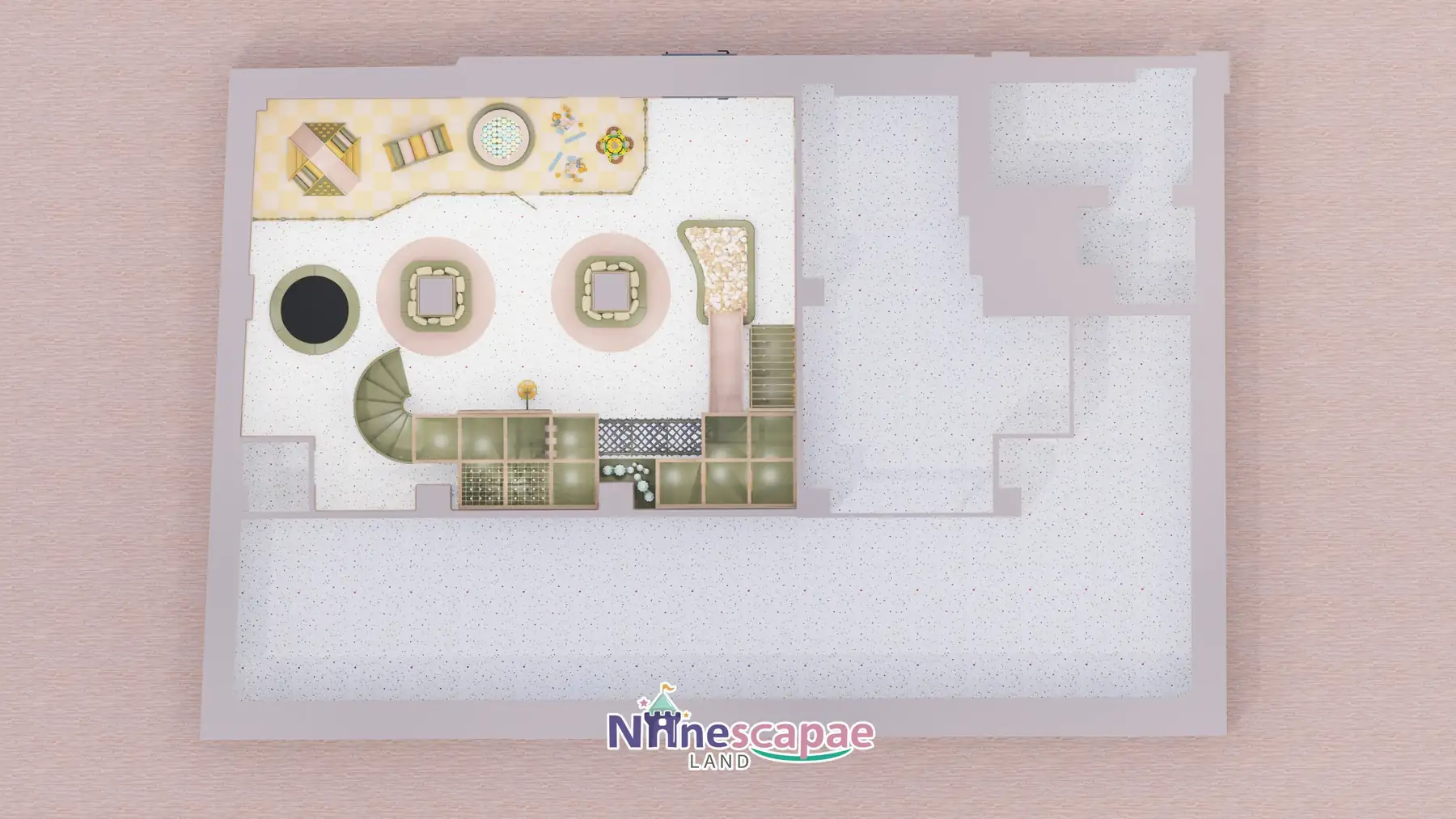

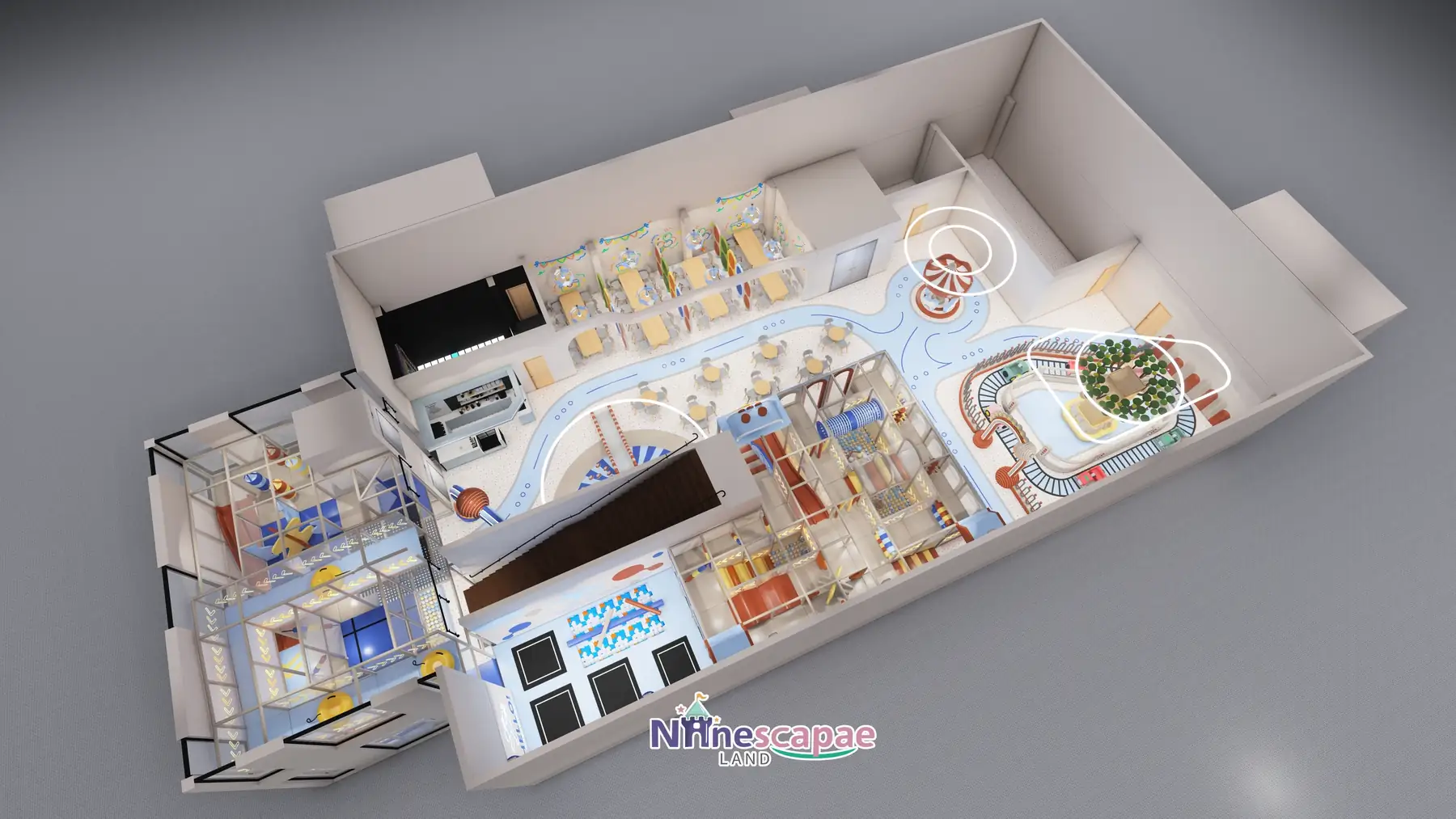
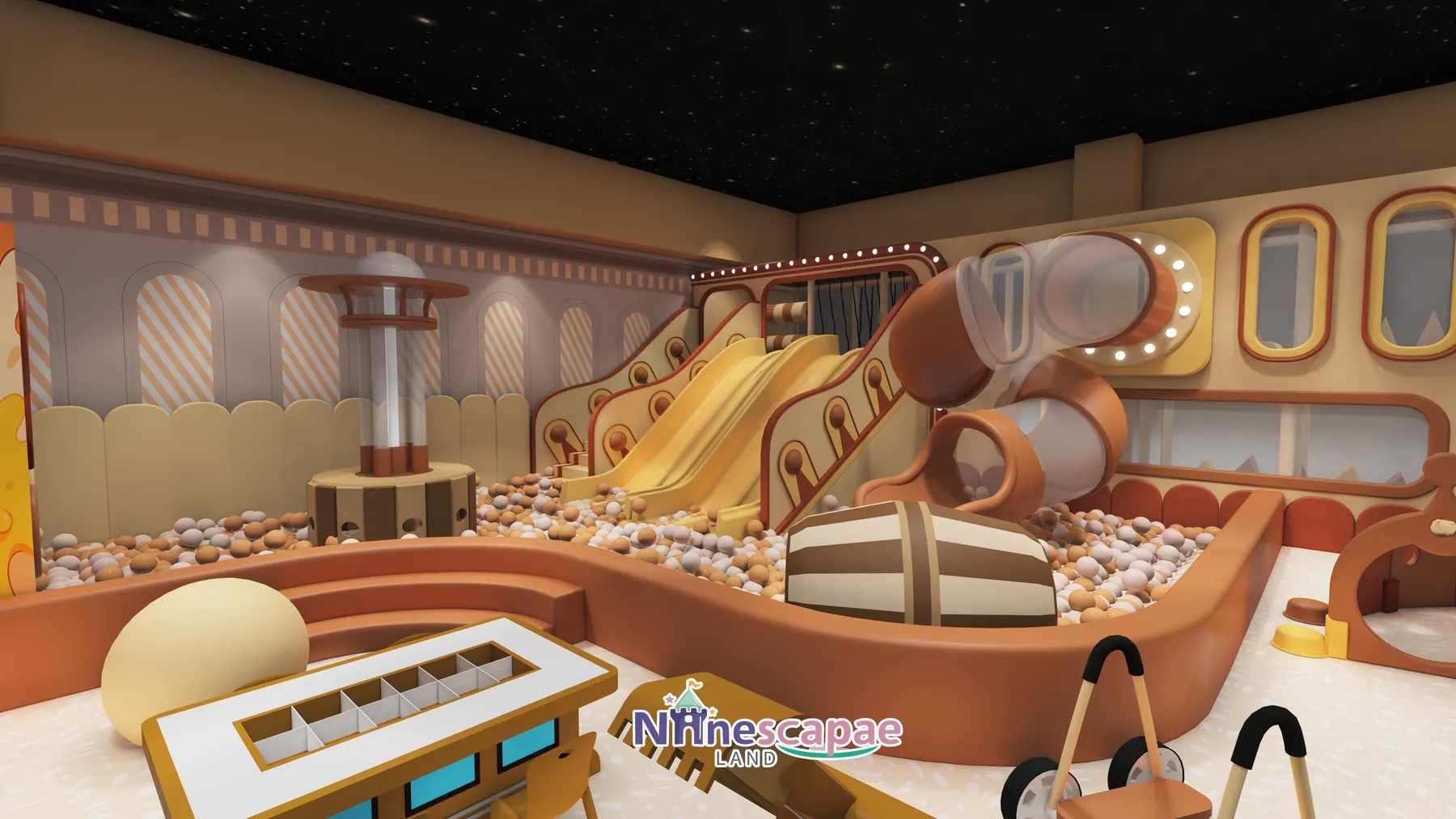
Unlike single-category local factories, it delivers the full FEC spectrum — trampoline parks, ninja courses, multi-level soft play mazes, climbing walls — from one factory, under one contract, with free 3D design. For cross-border buyers, the commercial terms are explicit:
| Item | Factory-direct terms (NinescapeLand) |
|---|---|
| Scope | Full FEC spectrum — trampoline parks, ninja courses, multi-level soft play mazes and climbing walls — from one production line, one contract, with free 3D design |
| Payment | 30% deposit with the balance before shipment |
| Production | 20–45 days depending on category |
| Freight | Sea or rail, 20–40 days |
| Installation | 5–10 days (7–20 for large projects), with 3D installation drawings and video guidance for self-installation |
| Total timeline | 2–3 months; up to 4 for large or remote projects |
| Warranty | 3 years on steel structures (ninja line: 1 year on its steel structures) and 1 year on soft elements and coverings, with lifetime technical support via on-site and remote channels |
An honest note on the trade-offs: a full cross-border FEC build takes longer than a local single-category order, and after-sales runs primarily through remote guidance plus shipped spare parts — on-site engineer visits need scheduling. These are the real costs of factory-direct importing, and buyers should weigh them against the gains: one supplier across all attractions, deeper customisation, and factory-direct terms.
Get a free 3D design and production schedule for your venue →
How We Selected These Manufacturers
We compiled this list over three research rounds: industry association and RAAPA exhibitor records, Russian-language search, and company-by-company verification of websites, registered entity data (INN/OGRN) and named projects. Every entry above is a manufacturer with self-owned production evidence — factory addresses, legal entity registration, or named delivery projects.
We grade evidence in three tiers, and the wording of each entry reflects its tier: Tier 1 (door-level factory address and/or published legal entity data plus named projects) supports direct statements; Tier 2 (factory claims on the company’s own website plus partial third-party confirmation) is marked “according to its website”; Tier 3 (credible manufacturer with a narrower relevant product line) carries category qualifiers. Where a founding year could not be verified against registry data, we simply omit it — and where a company’s own claims conflicted with its registry record, we say so in its entry.
Before You Sign: Due-Diligence Questions & Documents Checklist
Russian registry data makes local verification easier than in most markets. Use it.
Five questions to ask any supplier:
- Which legal entity signs the contract, and what are its INN/OGRN? (Check them free at rusprofile.ru.)
- Where exactly is the factory, and can we visit or video-tour it?
- Which products are made in-house, and which are bought in? (Several Russian suppliers integrate imported equipment — confirm per product line.)
- Which certification documents come with the equipment, and who is the certificate holder?
- What is the warranty on steel structures and soft elements, and how are spare parts priced after warranty?
Documents to have before the deposit: certificate numbers with validity scope, fire-safety documentation for foam and fabrics, an itemized quotation (equipment / flooring / delivery / installation as separate lines), production schedule with dates, installation scope definition, warranty terms, and a spare-parts price list.
Shipping & Payment: What Actually Works in 2026
Routes and times. Rail freight from China’s major departure cities to Moscow takes roughly 12–20 days (for example, Yiwu–Moscow 12–14 days; a Tianjin–Moscow service launched in 2024 at about 15 days). To Almaty, rail takes around 6 days, and about 10 days to Tashkent. Sea options: to Vladivostok 6–8 days port-to-port plus 12–14 days onward rail to Moscow; to Novorossiysk 30–40 days; to St. Petersburg 35–45 days. Road freight (TIR) runs 12–20 days door-to-door for consolidated loads.
The oversized-equipment catch. Trampoline steel frames, multi-level maze structures and climbing walls routinely exceed standard container dimensions. They ship on flat racks or open-top containers, which must be booked well in advance, with lashing and securing budgeted separately. Rail is strict about gauge limits for oversized pieces — for a full park, sea-plus-rail or road is usually the practical combination. Winter weather and border congestion can add days to any route.
Payment reality. Over 90% of China–Russia trade is now settled in rubles and yuan. But payment channels tighten and loosen with the sanctions cycle: in 2024, several major Chinese banks suspended or slowed Russia-related transfers, and companies that routed payments through third-country intermediaries paid costs of up to 3–6%. Practical protections: agree the settlement currency in the contract, confirm the receiving bank works for your transfer route before paying the deposit, and expect compliance checks to add weeks — build it into the timeline.
Certification: EAC Done Right
This is where imported playground equipment most often gets stuck, so it deserves precision.
The common mistake. Much of the internet will tell you playground equipment is certified under TR CU 008/2011 “On toy safety.” That regulation explicitly excludes playground equipment from its scope. Toys and play equipment are certified under different regulations — applying the wrong one gets your shipment stuck at customs.
The correct path. Playground equipment falls under the EAEU technical regulation for children’s playground equipment safety (TR EAEU 042/2017, in force since November 2018). It explicitly excludes toys (TR CU 008/2011), amusement rides (TR EAEU 038/2016) and sports equipment — those follow their own regulations. Which conformity-assessment form applies depends on the product:
- EAC Certificate of Conformity (CoC) — for high-risk equipment such as slides, swings, seesaws, carousels, climbing structures and play towers. This involves testing by an accredited body plus a factory audit, with a maximum 5-year validity.
- EAC Declaration of Conformity (DoC) — for lower-risk items such as sand play, playhouses and maze-type facilities. Simpler procedure, but still a formal conformity document.
Two structural points matter for importers:
- A Chinese (or other non-EAEU) factory cannot be the certificate holder. The applicant must be an EAEU-registered company — your importer or an authorised representative — under a formal agreement. Confirm before ordering who will hold the certificate.
- Technical documentation must be in Russian.
By country. EAC works across the EAEU — Russia, Belarus, Kazakhstan, Kyrgyzstan, Armenia — so one certificate covers Kazakhstan deliveries too. Uzbekistan is not an EAEU member: EAC is not recognised at its customs, and equipment needs separate Uzstandard (GOST UZ) certification.
Where EN 1176 and ASTM fit. Russia’s national standard GOST R 52169-2012 is based on EN 1176-1 (non-equivalent adoption). EN 1176 test reports support your safety case and ease technical discussions, but they do not replace EAC — Russian customs requires the EAC documents.
From Deposit to Opening Day: A Realistic Timeline
Using factory-direct importing as the worked example (your supplier’s numbers may differ):
| Stage | Duration |
|---|---|
| Inquiry, quotation, contract | 1–5 days |
| Free 3D design and revisions | 3–5 working days (up to 10 for large venues) |
| 30% deposit → production start | Production 20–45 days by category (soft play 20–30; FEC 25–35; ninja 25–40; trampoline 30–45) |
| Freight to Russia | Sea/rail 20–40 days |
| Customs clearance | Include EAC documents before arrival; compliance checks can add time |
| Installation | 5–10 days (7–20 for large projects; self-install supported with 3D drawings + video) |
| Total | ~2–3 months; up to 4 for large or remote projects |
The stages most likely to slip: the payment transfer (compliance checks), customs (missing EAC paperwork), and mall scheduling (fit-out windows). Ask your supplier for a schedule keyed to your opening date — and add buffer for winter routes.
Want a timeline for your opening date? Send us your floor plan →
Local Factory vs Factory-Direct Import: Comparison Table
| Criteria | Russian local factory | Factory-direct import (e.g. NinescapeLand) |
|---|---|---|
| Product range | Specialised per factory (trampolines OR mazes OR rope OR soft play) | Full FEC spectrum from one line |
| Customisation depth | Strong within the factory’s category | Deep across all categories, free 3D design |
| Lead time | Shorter for single-category orders (local examples: 18–28 working days) | 2–3 months total, door to opening |
| Cross-border delivery | Only 3 of 14 local factories have named projects abroad | 75+ countries; named cases on three continents |
| Certification | GOST R / EAC via local procedures | EAC via EAEU applicant — confirm holder before ordering |
| After-sales | Local presence, fast small repairs | Remote guidance + spare parts shipping; on-site visits scheduled |
| Best for | Single-category additions, fast local replacements | Full new-build FEC, multi-attraction venues, one-contract delivery |
When the right-hand column is your column. This table is honest about both routes, and the left column is the right choice for many buyers — we said so in #15’s honest note. But notice what happens as your project grows: a trampoline zone here, a ninja element there, a two-level maze, murs d'escalade along one wall. Each additional attraction type adds one more factory, one more contract, one more freight arrangement, one more certification file, and one more interface where two suppliers’ schedules can slip against each other. At some point you are no longer buying equipment — you are managing a supply chain. That is the point where factory-direct becomes the simpler option rather than the cheaper experiment: one 3D design covering the whole floor, one production schedule, one shipment plan, one party accountable from deposit to opening day. That is the project shape NinescapeLand is built for, and the reason it closes this list.
Compare your shortlist with our quotation checklist →
FAQ
How long does shipping playground equipment from China to Russia take?
Rail to Moscow runs about 12–20 days; sea to Vladivostok plus rail is another common route. For full FEC equipment, add production time (20–45 days by category) and oversized-cargo handling — flat racks and open-top containers need advance booking. Total door-to-opening is typically 2–3 months.
Can I pay a Chinese factory in rubles or yuan?
Yes — over 90% of China–Russia trade settles in the two currencies. The practical risk is the banking channel: compliance reviews can delay transfers for weeks, so fix the settlement currency and receiving bank in the contract before paying any deposit.
What certification does indoor playground equipment need in Russia?
An EAC document under the EAEU playground equipment regulation TR EAEU 042/2017 — not the toy safety regulation TR CU 008/2011, which explicitly excludes playground equipment. High-risk equipment (slides, swings, climbing structures) needs an EAC Certificate of Conformity with factory audit; lower-risk items (sand play, playhouses, mazes) can use a Declaration of Conformity. Either way the applicant must be an EAEU-registered company and documentation must be in Russian. Kazakhstan accepts EAC; Uzbekistan requires separate national certification.
Is it cheaper to buy from a Russian factory or import from China?
It depends on scope. For a single trampoline module or a replacement element, a local factory avoids freight and customs entirely. For a full multi-attraction FEC, compare total cost of ownership: equipment plus freight plus certification plus installation — and weigh the single-contract simplicity of factory-direct delivery against multi-supplier coordination. Get itemized quotations for both routes before deciding.
Who handles installation and after-sales for imported equipment?
NinescapeLand ships 3D installation drawings and video guidance for self-installation (5–10 days typical; 7–20 for large projects), or provides on-site engineers for larger projects. After-sales runs through remote technical support and shipped spare parts — steel structures carry a 3-year warranty (1 year for ninja-course steel structures), soft elements 1 year, with lifetime technical support.
Related guides: our market analysis of the Top Indoor Playground Equipment Manufacturers in the Middle East and our worldwide ranking of the Top Indoor Playground Equipment Manufacturers in the World.
[Obtenez un devis gratuit] · WhatsApp: +86 150 5878 2901 · sale@indoorplaysystem.com
Reviewed by the NinescapeLand project engineering team — 1,000+ indoor playground projects delivered in 75+ countries since 2008.